Archive for the ‘The A-listers’ Category

Murray’s unique claim to be SPOTY: Solo, historic magnificence in a golden age

Wednesday, December 12th, 2012

*

The BBC’s annual Sports Personality of the Year award will be handed out on Sunday evening, and never in the 58-year history of the award has there been a stronger batch of contenders. The 12-person shortlist is packed with Olympians and Paralympians, many of whom have achieved historic feats in 2012, and there is also room for the world’s No1 golfer. In alphabetical order the contenders are Nicola Adams, Ben Ainslie, Jess Ennis, Mo Farah, Kath Grainger, Sir Chris Hoy, Rory McIlroy, ANDY MURRAY, Ellie Simmonds, Sarah Storey, David Weir and Bradley Wiggins. Frankly, only four of those have any hope of winning and Wiggins (hot favourite) Ennis, Farah and Murray will surely share three podium places between them. Yet, as Murray’s biographer MARK HODGKINSON contends, Murray alone can claim solo and historic magnificence in 2012 while also being able to claim his (truly global) sport has never been better.

.

By Mark Hodgkinson

12 December 2012

Andy Murray deserves to win SPOTY because …

.

ONE - He is operating in a golden age; Bradley Wiggins plainly isn’t. Indeed, most would consider this to be cycling’s age of doubt, something less than golden.

Winning a Grand Slam in any era is no small achievement. But Murray had the misfortune of sharing an era with two of the greatest players of all time – Roger Federer and Rafa Nadal – while Novak Djokovic, his opponent in the US Open final, has five Slam titles.

Even if Murray never wins another major, no one should ever accuse him of being a one-slam wonder. There has never been a harder time to win a Grand Slam, and Murray won one, in an era quantifiable as the most perfect era tennis has seen.

.

TWO - For all the attention on the unsmiling face of Ivan Lendl, Murray was out there on his own when he won Olympic gold and the US Open. He won those titles as an individual.

Lendl’s presence at the side of the court in New York plainly helped (he wasn’t at the Olympics). But it was Murray who did all the grafting, who toiled away at the baseline.

This was a solo effort. The same cannot be said for Wiggins during the Tour de France, who had the support of team-mates who had put aside their personal ambitions to help Wiggins win the race.

.

THREE – Because it would annoy all the ‘Anyone but Murray’ jihadists (there is no more tiresome group in sport).

Victory on Sunday would kill the idea that Murray is an unpopular figure, that the public feel no warmth towards him. It would also be a formal recognition of the new relationship between the Scot and the Great British public.

Consider that all those keyboard warriors who loathe Murray for a joke he made as a teenager about the England football team would hate the idea of Murray winning an award decided by a public vote. Ignore what happened at The O2 the other week, during Murray’s match against Roger Federer at the season-ending Barclays ATP World Tour Finals.

Yes, the crowd favoured Federer, but, according to executives at the tournament, that was because the Swiss tennis public had block-bought tickets months in advance. Ignore the noisy Swiss, provoke the Murray haters. Vote Murray.

.

FOUR – Jessica Ennis and Mo Farah helped to produce that golden Saturday during the Games.

And one of the iconic images of the Olympics was of Bradley Wiggins sitting on a throne at Hampton Court.

But consider what Google disclosed this week, that Murray was the most searched-for British Olympian.

Murray, by defeating Roger Federer in the singles gold medal match, and then with the bonus of winning a silver medal in the mixed doubles event with Laura Robson, had as much impact as any other British Olympian. If not more.

.

.

FIVE – Murray’s tears after defeat in the Wimbledon final was the most emotional moment in British sport this year.

Murray doesn’t have Wiggins’s sideburns or wit, and he doesn’t have a celebration that captured the public’s imagination like Farah’s Mobot, but no one should ever again accuse him of lacking personality.

There is a case to be made that he’s the most complicated individual on the short list.

.


.

Mark Hodgkinson is the author of ‘Andy Murray: Champion: The Full Extraordinary Story’

Hodgkinson is also the editor in chief of TheTennisSpace, which has a Twitter account here

.

More on tennis

Follow SPORTINGINTELLIGENCE on Twitter

Sportingintelligence home page

  • LinkedIn
  • Twitter
  • Yahoo Messenger
  • Share/Bookmark

Kroenke heads list of global sports tycoons as USA switches on to THE global game

Friday, May 11th, 2012

By Nick Harris

SJA Internet Sports Writer of the Year

11 May 2012

The world’s foremost sports tycoons, many of them US entertainment entrepreneurs, are increasingly turning to football as America’s interest in the sport grows and as Stateside investors realise there is only one truly global game.

Sportingintelligence has compiled a list of the 22 men – and they are all men – who each own at least two teams across a range of the world’s different major sports leagues / competitions, all of which can claim global fan bases, albeit of different magnitudes.

For the purpose of this study, we considered North America’s big five leagues (NFL, NBA, MLB, NHL, MLS), plus the world’s ‘big five’ football leagues (England’s Premier League, Spain’s La Liga, Italy’s Serie A, Germany’s Bundesliga and France’s Ligue 1) plus the IPL (the richest sports league in Asia, the world’s biggest continent), plus global motor sport’s two richest circuits, F1 and NASCAR.

The 22 men on the list each own a minimum of two teams from these competitions, and 15 of them own at least one football team. Between them, they own 18 football teams (highlighted by logos in list below), nine NHL ice hockey teams, eight NBA teams, eight MLB teams, six NFL teams, five Premier League teams, four Formula One teams, an IPL team, a Ligue 1 team, a Liga team and a NASCAR team.

The single league where these Multi-Sport Tycoons (MSTs) converge in the biggest number, appropriately enough, is in the MLS in America, where 11 of the 19 teams are owned by an ‘MST’.

The 22 MSTs are comprised of 17 Americans, an Austrian, a Canadian, an Indian, a Malaysian and a Qatari family.

We have ranked the 22 MSTs by the following criteria:

1: the number of ‘major’ teams they own from our nominated leagues.

2: if major teams are equal then on the number of other teams they own in ‘smaller’ leagues.

3: if major teams and other teams are equal, then the MSTs are split on on net worth.

Stan Kroenke, the majority shareholder of Arsenal in the Premier League as well as the owner of the MLS’s Colorado Rapids, the NFL’s St. Louis Rams, the NBA’s Denver Nuggets and the NHL’s Colorado Avalanche (NHL), owns more major teams (5) than anyone in world sport, as well as several venues.

Kroenke recently failed in a bid to add a sixth team, baseball’s LA Dodgers.

He is followed in our list (in full below) by Phil Anschutz (four major teams and seven others) and Austria’s Dietrich Mateschitz (three major teams and four others).

The 22 MSTs have a combined net worth of $135.59 billion, from the Al Thani royal family of Qatar ($85 billion) to Dave Checketts (c.$100m).

The percentage of teams in different leagues owned by MSTs is as follows:  MLS, 11 of 18 (58 per cent); Formula One, 4 of 12 (33 per cent); NHL,  9 of 30 (30 per cent); NBA 8 of 30 (27 per cent); MLB, 8 of 30 (27 per cent); Premier League 5 of 20 (25 per cent); NFL, 6 of 32 (19 per cent); IPL 1 of 9 (11 per cent); NASCAR 1 of 21 (five per cent); Ligue 1, 1 of 20 (5 per cent); La Liga, 1 of 20 (five per cent).

No Serie A or Bundesliga teams are owned by MSTs. While Juventus of Serie A are owned by the Agnelli family, via a company called Exor which also holds a significant stake in Fiat, the ultimate parent company that own’s F1′s Ferrari, Fiat is a publicly listed company. As such, no individual Agnelli has personal dominion over both the football club and racing team in the same way as the 22 MSTs influence their sports properties.

Anyone looking for trends in sports ownership will note the increasing amount of US owners in English football in recent years, from the Glazers at Manchester United to Randy Lerner at Aston Villa, Kroenke at Arsenal and John W Henry at Liverpool. Other Americans, notably Robert Kraft, have actively explored options in English football.

Tony Fernandes of Malaysia and Vijay Mallya of India exemplify the emergence of Asian sports tycoons in recent years, or be more accurate, tycoons who have diversified into sport.

The royal family of Qatar, who in effect control that nation and its vast oil wealth, have been conspicuously diversifying their own interests too, laying the groundwork for a post-oil economy. Most famously they bankrolled the successful bid to stage the 2022 World Cup. Different branches of the family / business have now also got involved in European football, buying PSG in France and Malaga in Spain, and sponsoring the shirts of the world’s most glamourous team, Barcelona.

Sportingintelligence has also been told that Qatar money is behind an ongoing assessment of several clubs in England (Newcastle and Fulham) and in Italy’s Serie A, with a view that the royal family will buy a club in England and Italy if possible in the near future.

.

COMPANION reading: REVEALED – the world’s best paid sports teams

Follow SPORTINGINTELLIGENCE on Twitter

Sportingintelligence home page


The world’s major multi-sport tycoons


Stan KROENKE USA

Net worth: $3.2 billion.

Source of income: real estate.

.

Major teams (5, two of them football): St. Louis Rams (NFL), Denver Nuggets (NBA), Colorado Avalanche (NHL), Colorado Rapids (MLS) & Arsenal (EPL).

Other sports teams (1) and sports interests: Colorado Mammoth (NLL). Owns Pepsi Centre, Dick’s Sporting Goods Park, Altitude Sports and Entertainment network.


2 Phil ANSCHUTZ USA

Net worth: $7 billion.

Source of income: oil, real estate.

.

Major teams (4, two of them football): LA Kings (NHL), LA Galaxy (MLS), Houston Dynamo (MLS) & a share of LA Lakers (NBA).

Other sports teams (7) and sports interests: Ontario Reign (ECHL), Reading Royals (ECHL), Manchester Monarchs (AHL), Eisbaren Berlin (Germany hockey league), Hamburg Freezers (German hockey league), Hammarby (Swedish soccer), LA Sparks (WNBA). Owns Staples Centre, Home Depot Centre and operates the O2 Arena (London).


3 Dietrich MATESCHITZ Austria

Net worth: $5 billion.

Source of income: energy drink.

.

Major teams (3, one of them football): Red Bull Racing (F1), Scuderia Toro Rosso (F1) & New York Red Bulls (MLS).

Other sports teams (4): FC Red Bull Salzburg (Austrian Bundesliga), EC Red Bull Salzburg (Erste Bank Hockey League, Austria), Red Bull Brasil (Sao Paulo state championship), Red Bull Leipzig (German Regionalliga Nord).


4 Ted LERNER USA

Net worth: $3.3 billion.

Source of income: real estate.

.

Major teams (3): Washington Nationals (MLB), Washington Wizards (NBA) & Washington Capitals (NHL).

Other sports teams (1) and sports interests: Washington Mystics (WNBA). Co-owns Verizon Centre via holding in Monumental Sports and Entertainment.


5 Larry TANENBAUM Canada

Net worth: $1 billion.

Source of income: construction.

.

Major teams (3, one of them football): Toronto Raptors (NBA), Toronto Maple Leafs (NHL), Toronto FC (MLS).

Other sports teams (1) and sports interests: Toronto Marlies (AHL). Co-owns Air Canada Centre via Maple Leaf Sports & Entertainment, and holdings in Leafs TV, NBA TV Canada and GolTV Canada.

.

6 John HENRY USA

Net worth: $840 million.

Source of income: commodities trading.

.

Major teams (3, one of them football): Boston Red Sox (MLB), Liverpool (EPL) & Roush Racing (NASCAR).

Other sports teams (1) and sports interests: Salem Red Sox (Carolina League). Owns Fenway Park, Anfield, New England Sports Network.


7 Paul ALLEN USA

Net worth: $13.2 billion.

Source of income: Microsoft.

.

Major teams (3, one of them football): Seattle Seahawks (NFL), Portland Trail Blazers (NBA) & Seattle Sounders (MLS).


8 The HUNT Family USA

Net worth: $965 million.

Source of income: oil.

.

 Major teams (3, two of them football): Kansas City Chiefs (NFL), FC Dallas (MLS) & Columbus Crew (MLS).


9 The DOLAN family USA

Net worth: $2.6 billion.

Source of income: cable TV.

.

Major teams (2): New York Knicks (NBA) & New York Rangers (NHL).

Other sports teams (2) and sports interests: New York Liberty (WNBA), Connecticut Whale (AHL). Owns Madison Square Garden and regional cable networks MSG Network and MSG Plus.


10 Vijay MALLYA India

Net worth: $1.4 billion.

Source of income: brewing.

.

Major teams (2): Force India (F1), Bangalore Royal Challengers (IPL).

Other sports teams (1) and sports interests: East Bengal FC (Indian I-League soccer) and has been linked to bids for EPL clubs.


11 Ted LEONSIS USA

Net worth: $1 billion.

Source of income:  AOL.

.

Major teams (2): Washington Wizards (NBA) & Washington Capitals (NHL).

Other sports teams (1) and sports interests: Washington Mystics (WNBA). Co-owns Verizon Centre via holding in Monumental Sports and Entertainment.


12 Jeff VINIK USA

Net worth: $515 billion.

Source of income: finance, hedge funds.

.

Major teams (2): Tampa Bay Lightning (NHL) & a minority share in Boston Red Sox (MLB).

Other sports teams (1) and sports interests: Tampa Bay Storm (AFL). He also serves on the board at Liverpool (EPL).


13 The AL THANI family Qatar

Net worth: $85 billion.

Source of income: oil, natural gas.

.

Major teams (2, both of them football): Paris St Germain (Ligue 1), Malaga (La Liga).

Other sports interests: The Al Thani royal family fund the Aspire Sports Academy, and bankrolled the successful bid to stage soccer’s 2022 World Cup. They have been linked to bids for several EPL teams, and were in negotiation to buy the Silverstone F1 race circuit in England.


14 Malcolm GLAZER USA

Net worth: $2.4 billion.

Source of income: food processing, real estate.

.

Major teams (2, one of them football): Tampa Bay Bucs (NFL) & Manchester United (EPL).


15 Mike ILITCH USA

Net worth: $2 billion.

Source of income: pizza.

.

Major teams (2): Detroit Tigers (MLB) & Detroit Red Wings (NHL).


16 Robert KRAFT USA

Net worth: $1.7 billion.

Source of income: paper, packaging.

.

Major teams (2, one of them football): New England Patriots (NFL) & New England Revolution (MLS).


17 John FISHER (with partner Lewis WOLFF) USA

Net worth: $1.5 billion.

Source of income: Gap.

.

Major teams (2, one of them football): Oakland A’s (MLB) & San Jose Earthquakes (MLS).


18= Randy LERNER USA

Net worth: $1 billion.

Source of income: banking, credit cards..

.

Major teams (2, one of them football): Cleveland Browns (NFL) & Aston Villa (EPL).


18= Jerry REINSDORF USA

Net worth: $1 billion.

Source of income: real estate.

.

Major teams (2): Chicago White Sox (MLB), Chicago Bulls (NBA).

.

20 Tony FERNANDES Malaysia

Net worth: $470 million.

Source of income: aviation.

.

Major teams (2, one of them football): Queens Park Rangers (EPL), CaterhamF1 (F1).


21 Jeff MOORAD USA

Net worth: c.$400 million.

Source of income: sports agency.

.

Major teams (2): San Diego Padres (MLB), Arizona Diamondbacks (MLB).


22 Dave CHECKETTS USA

Net worth: c.$100 million.

Source of income: sports administration.

.

Major teams (2, one of them football): St Louis Blues (NHL, although has just completed sale to another group as of 10 May 2012) & Real Salt Lake (MLS).


  • LinkedIn
  • Twitter
  • Yahoo Messenger
  • Share/Bookmark

REVEALED: The world’s best paid teams, Man City close in on Barca and Real Madrid

Tuesday, May 1st, 2012

By Nick Harris

SJA Internet Sports Writer of the Year 

1 May 2012

Barcelona remain the best paid team in global sport measured by average first-team wages, with Real Madrid in second place but Manchester City of the Premier League have stormed into the top three and continue to close the gap on the Spanish giants according to the Sportingintelligence Global Sports Salaries Survey 2012, published this week.

The average first team pay at Barcelona – employees of the world’s best player, Lionel Messi – has been calculated at £101,160 per player per week, or £5,260,313 per year in the period under review. That represents a year-on-year increase of 10 per cent at the Nou Camp as Barca hold their No1 spot.

Real Madrid’s players in No2 place earned £90,859 per week (£4.7m per year, a rise of six per cent).

First-team stars at City, at No3, earned an average of £86,280 per man per week, or £4.5m per year, the highest salaries ever paid in the English Premier League, the world’s richest football league. City’s numbers represent a 26 per cent year-on-year increase in average first-team pay and demonstrate the depth of the pockets of oil-rich owner Sheikh Mansour.

Another Premier League team, Chelsea, climb from No6 to No4 this year, with average first-team pay of £4.1m per player, a reminder they are hardly paupers, despite a perception in some quarters that their Russian petrodollar billionaire owner Roman Abramovich has eased off his spending recently.

Chelsea’s progress to the 2012 Champions League final at the expense of Barcelona was a shock in footballing terms but not unsurprising set against the reservoirs of cash Abramovich has spent on players, managers and salaries since 2003.

Click on graphic (above) to enlarge to see the top 12 in detail. The full list is below. AND IN GRAPHICS BY LEAGUE HERE

This year’s report has been again been compiled in association with ESPN The Magazine in America, for a special ‘All About the Money’ issue, on sale this week.

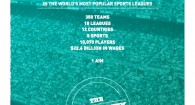
The salaries report (available as a PDF here) features average salary information from 278 teams in 14 leagues in seven sports across 10 countries. It includes information from the dozen most popular sports leagues in the world (by average attendance per game) plus the MLS and SPL as examples of smaller leagues from the world’s most popular sport, football.

Figures are from the in-progress seasons in NBA basketball, NHL ice hockey, MLB baseball and MLS football, and from the most recently completed seasons for all the other teams, including the major leagues of European football to IPL cricket, AFL Aussie Rules, CFL Canadian football and NPB Japanese baseball.

The full list is below, while ESPN The Magazine also carries details online at this link, where there are more links to other content and details about the special issue of the magazine.

Sportingintelligence’s first global salaries report was published in 2010, to compare average first-team pay on a like-for-like basis for the first time at clubs in the world’s richest and most popular sports leagues. The New York Yankees were No1 that year, and the top 10 included seven American sports teams, six of them from the NBA.

By last year, the Yankees had been knocked off their perch by Barca and Real, and Manchester City had soared from No86 in the 2010 list into the No10 spot in 2011.  The top 10 in 2011 had five American teams and five from European football.

This year’s top 10 has three American teams (the Yankees and Phillies from baseball and the LA Lakers from the NBA) and seven European football teams.

As the introduction to the main report notes: “This is a function of the unrelenting growth in football income – and expenditure – among the elite clubs in European football, which is also unhindered by any wage caps, and the relative stability and restraint in America’s major sports leagues.

“It is possible but by no means certain that some wage restraint at some European football clubs is on the horizon as a result of new ‘Financial Fair Play’ rules (FFP) being introduced by Uefa, the governing body of football across Europe … But the effectiveness of Uefa’s policing remains to be seen. And in any case, the biggest, richest clubs will almost certainly continue to generate massive sums, and therefore continue to fund growing salary bills.”

The top 20 in the 2012 review includes six teams from the NBA, five from the Premier League, four from MLB baseball, two each from La Liga and Serie A and one from the Bundesliga.

The full report includes an overview of average salaries across each league, and considers the pay differential between the best-paid team in each league and the lowest-paid team.

The NBA remains the best-paid league overall per man, with average annual salaries of £2.65m a year, or £50,883 per player per week on average. The LA Lakers are the highest paying team in the NBA and the Indian Pacers the lowest, and the difference between the two is a ratio of 1.86 to 1.

This is tiny compared the ratio between the best paid and worst paid in Spain: 22.81 to 1. That is why Barcelona and Real Madrid are way head of everyone else in that league. Even the Scottish SPL is no longer as stretched as that (with a ratio of 19.18 to 1 between top and bottom).

This year’s full 18-page report, available as a PDF, includes introductory analysis on trends, has the full list of average salaries, contains the summary information about leagues as a whole. More in-depth league-by-league analysis will be published over time on this website.

.

Follow SPORTINGINTELLIGENCE on Twitter

Sportingintelligence home page

.

Global Sports Salaries Survey 2012: the richest teams by average first-team pay


The sports are colour-coded: football, basketball, baseball, cricket, gridiron, ice hockey, Aussie rules football

* Highest paid in that league.  NB: IPL annual figures extrapolated, pro rata, from weekly figures.


Rank (last year) – Team – League – Ave player pay, £ per year (week)Ave player pay $ per year (week)      


1 (1) Barcelona * La Liga £5,260,313 (£101,160) $8,680,569 ($166,934)        

2 (2) Real Madrid La Liga £4,724,662 (£90,859) $7,796,637 ($149,935)

3 (10) Manchester City * EPL £4,486,580 (£86,280) $7,403,754 ($142,380)  

4 (6) Chelsea EPL £4,118,227 (£79,197) $6,795,899 ($130,690)

5 (4) LA Lakers * NBA £3,804,441 (£73,162) $6,278,088 ($120,732)     

6 (3) New York Yankees * MLB £3,748,831 (£72,093) $6,186,322 ($118,968)       

7 (14) Milan * Serie A  £3,699,411 (£71,143) $6,104,769 ($117,399)         

8 (12) Bayern Munich * Bundesliga £3,579,961 (£68,845) $5,907,652 ($113,609)         

9 (13) Philadelphia Phillies MLB £3,525,612 (£67,800) $5,817,965 ($111,884)

10 (7) Internazionale Serie A £3,454,681 (£66,436) $5,700,915 ($109,633)


11 (16) Manchester United EPL £3,345,911 (£64,344) $5,521,423 ($106,181)

12 (43) San Antonio Spurs NBA £3,302,712 (£63,514) $5,450,135 ($104,810)

13 (28) LA Angels MLB £3,228,139 (£62,080) $5,327,075 ($102,444)

14 (42) Chicago Bulls NBA £3,226,329 (£62,045) $5,324,088 ($102,386)

15 (15) Boston Celtics NBA £3,224,721 (£62,014) $5,321,435 ($102,335)

16 (22) Arsenal EPL £3,199,678 (£61,532) $5,280,108 ($101,541)

17 (58) Miami Heat NBA £3,188,496 (£61,317) $5,261,657 ($101,186)

18 (20) Liverpool EPL £3,169,631 (£60,954) $5,230,525 ($100,587)

19 (8) Boston Red Sox MLB £3,086,731 (£59,360) $5,093,724 ($97,956)

20 (27) Memphis Grizzlies NBA £3,040,693 (£58,475) $5,017,751 ($96,495)


21 (21) Dallas Mavericks NBA £2,989,371 (£57,488) $4,933,060 ($94,867)

22 (24) Atlanta Hawks NBA £2,933,753 (£56,418) $4,841,280 ($93,102)

23 (19) Philadelphia 76ers NBA £2,909,924 (£55,960) $4,801,957 ($92,345)

24 (52) LA Clippers NBA £2,874,816 (£55,285) $4,744,022 ($91,231)

25 (38) Juventus Serie A £2,845,701 (£54,725) $4,695,976 ($90,307)

26 (66) Texas Rangers MLB £2,808,773 (£54,015) $4,635,037 ($89,135)

27 (47) Detroit Tigers MLB £2,764,555 (£53,165) $4,562,069 ($87,732)

28 (5) Orlando Magic NBA £2,757,779 (£53,034) $4,550,887 ($87,517)

29 (123) Miami Marlins MLB £2,650,139 (£50,964) $4,373,259 ($84,101)

30 (£6) Portland Trail Blazers NBA £2,641,418 (£50,797) $4,358,869 ($83,824)


31 (39) Phoenix Suns NBA £2,608,333 (£50,160) $4,304,271 ($82,774)

32 (35) Milwaukee Bucks NBA £2,594,772 (£49,899) $4,281,893 ($82,344)

33 (37) New Orleans Hornets NBA £2,543,396 (£48,911) $4,197,111 ($80,714)

34 (56) Schalke Bundesliga £2,537,706 (£48,802) $4,187,722 ($80,533)

35 (31) Detroit Pistons NBA £2,528,854 (£48,632) $4,173,115 ($80,252)

36 (29) Kolkata Knight Riders * IPL £2,525,129 (£48,560) $4,166,968 ($80,134)

37 (49) NY Knicks NBA £2,524,456 (£48,547) $4,165,858 ($80,113)

38 (11) Utah Jazz NBA £2,517,627 (£48,416) $4,154,588 ($79,896)

39 (44) Mumbai Indians IPL £2,509,657 (£48,263) $4,141,436 ($79,643)

40 (34) Golden State Warriors NBA £2,474,790 (£47,592) $4,083,898 ($78,537)


41 (51) Aston Villa EPL £2,464,831 (£47,401) $4,067,464 ($78,220)

42 (9) Denver Nuggets NBA £2,463,222 (£47,370) $4,064,809 ($78,169)

43 (53) New Jersey Nets NBA £2,417,102 (£46,483) $3,988,701 ($76,706)

44 (48) St Louis Cardinals MLB £2,387,175 (£45,907) $3,939,317 ($75,756)

45 (55) Washington Wizards NBA £2,385,681 (£45,878) $3,936,851 ($75,709)

46 (33) San Francisco Giants MLB £2,375,887 (£45,690) $3,920,689 ($75,398)

47 (62) Roma Serie A £2,361,932 (£45,422) $3,897,660 ($74,955)

48 (23) Chicago White Sox MLB £2,349,279 (£45,178) $3,876,780 ($74,553)

49 (32) Charlotte Bobcats NBA £2,339,193 (£44,984) $3,860,136 ($74,233)

50 (-) Pune Warriors IPL £2,326,765 (£44,745) $3,839,628 ($73,839)


51 (110) Tottenham EPL £2,308,494 (£44,394) $3,809,476 ($73,259)

52 (87) Minnesota Timberwolves NBA £2,296,463 (£44,163) $3,789,623 ($72,877)

53 (18) Houston Rockets NBA £2,292,551 (£44,088) $3,783,167 ($72,753)

54 (73) Milwaukee Brewers MLB £2,276,040 (£43,770) $3,755,921 ($72,229)

55 (26) Royal Challengers Bangalore IPL £2,262,072 (£43,501) $3,732,872 ($71,786)

56 (46) Toronto Raptors NBA £2,222,318 (£42,737) $3,667,270 ($70,524)

57 (50) Oklahoma City Thunder NBA £2,220,345 (£42,699) $3,664,013 ($70,462)

58 (-) Kochi Tuskers Kerala IPL £2,186,099 (£42,040) $3,607,500 ($69,375)

59 (60) Delhi Daredevils IPL £2,184,618 (£42,012) $3,605,056 ($69,328)

60 (54) Chennai Super Kings IPL £2,154,524 (£41,433) $3,555,396 ($68,373)


61 (69) Sacramento Kings NBA £2,118,801 (£40,746) $3,496,445 ($67,239)

62 (25) Minnesota Twins MLB £2,111,641 (£40,608) $3,484,630 ($67,012)

63 (30) New York Mets MLB £2,095,234 (£40,293) $3,457,555 ($66,491)

64 (59) Cleveland Cavaliers NBA £2,056,330 (£39,545) $3,393,356 ($65,257)

65 (17) Chicago Cubs MLB £2,055,626 (£39,531) $3,392,194 ($65,234)

66 (41) Indiana Pacers NBA £2,050,492 (£39,433) $3,383,722 ($65,072)             <<<<< NBA lowest paid

67 (45) Deccan Chargers IPL £1,990,571 (£38,280) $3,284,840 ($63,170)

68 (126) Rajasthan Royals IPL £1,968,040 (£37,847) $3,247,660 ($62,455)

69 (57) Los Angeles Dodgers MLB £1,921,859 (£36,959) $3,171,453 ($60,989)

70 (86) Borussia Dortmund Bundesliga £1,892,391 (£36,392) $3,122,824 ($60,054)


71 (68) Valencia La Liga £1,857,660 (£35,724) $3,065,511 ($58,952)

72 (109) Buffalo Sabres * NHL £1,833,553 (£35,261) $3,025,729 ($58,187)

73 (78) Chicago Blackhawks NHL £1,826,261 (£35,120) $3,013,696 ($57,956)

74 (40) Kings XI Punjab IPL £1,785,180 (£34,330) $2,945,904 ($56,652)                <<<<< IPL lowest paid

75 (105) Pittsburgh Steelers * NFL £1,779,939 (£34,230) $2,937,255 ($56,486)

76 (92) Cincinnati Reds MLB £1,779,083 (£34,213) $2,935,843 ($56,459)

77 (71) Seattle Mariners MLB £1,774,203 (£34,119) $2,927,789 ($56,304)

78 (65) Baltimore Orioles MLB £1,701,549 (£32,722) $2,807,897 ($53,998)

79 (64) Atlanta Braves MLB £1,682,825 (£32,362) $2,776,998 ($53,404)

80 (85) Oakland Raiders NFL £1,673,000 (£32,173) $2,760,784 ($53,092)


81 (76) Werder Bremen Bundesliga £1,657,329 (£31,872) $2,734,924 ($52,595)

82 (84) Stuttgart Bundesliga £1,648,984 (£31,711) $2,721,154 ($52,330)

83 (158) Cleveland Indians MLB £1,638,888 (£31,517) $2,704,493 ($52,009)

84 (139) Toronto Blue Jays MLB £1,633,767 (£31,419) $2,696,043 ($51,847)

85 (61) Colorado Rockies MLB £1,631,350 (£31,372) $2,692,054 ($51,770)

86 (100) Washington Capitals NHL £1,623,137 (£31,214) $2,678,500 ($51,510)

87 (98) New York Rangers NHL £1,619,638 (£31,147) $2,672,727 ($51,399)

88 (77) Boston Bruins NHL £1,610,158 (£30,965) $2,657,083 ($51,098)

89 (142) Arizona Diamondbacks MLB £1,607,702 (£30,917) $2,653,030 ($51,020)

90 (88) Vancouver Canucks NHL £1,606,647 (£30,897) $2,651,288 ($50,986)


91 (122) Washington Nationals MLB £1,589,957 (£30,576) $2,623,747 ($50,457)

92 (135) LA Kings NHL £1,566,792 (£30,131) $2,585,521 ($49,722)

93 (106) Hamburg Bundesliga £1,563,389 (£30,065) $2,579,904 ($49,614)

94 (91) Atletico Madrid La Liga £1,560,739 (£30,014) $2,575,531 ($49,529)

95 (119) Carolina Panthers NFL £1,543,485 (£29,682) $2,547,059 ($48,982)

96 (104) Sevilla La Liga £1,542,974 (£29,673) $2,546,216 ($48,966)

97 (117) Tampa Bay Lightning NHL £1,538,324 (£29,583) $2,538,542 ($48,818)

98 (82) Dallas Cowboys NFL £1,531,603 (£29,454) $2,527,451 ($48,605)

99 (67) Detroit Red Wings NHL £1,530,481 (£29,432) $2,525,600 ($48,569)

100 (81) Philadelphia Flyers NHL £1,530,009 (£29,423) $2,524,821 ($48,554)


101 (121) New York Jets NFL £1,520,909 (£29,248) $2,509,804 ($48,265)

102 (118) Toronto Maples Leafs NHL £1,501,726 (£28,879) $2,478,148 ($47,657)

103 (124) New York Giants NFL £1,481,698 (£28,494) $2,445,098 ($47,021)

104 (136) Fulham EPL £1,469,616 (£28,262) $2,425,160 ($46,638)

105 (97) Detroit Lions NFL £1,457,934 (£28,037) $2,405,882 ($46,267)

106 (93) Montreal Canadiens NHL £1,454,370 (£27,969) $2,400,001 ($46,154)

107 (101) Pittsburgh Pengiuns NHL £1,451,914 (£27,921) $2,395,948 ($46,076)

108 (120) Everton EPL £1,437,370 (£27,642) $2,371,948 ($45,614)

109 (128) St Louis Rams NFL £1,436,546 (£27,626) $2,370,588 ($45,588)

110 (130) Sunderland EPL £1,434,654 (£27,590) $2,367,467 ($45,528)


111 (83) San Jose Sharks NHL £1,429,269 (£27,486) $2,358,580 ($45,357)

112 (151) Bolton EPL £1,419,805 (£27,304) $2,342,962 ($45,057)

113 (94) West Ham EPL £1,417,310 (£27,256) $2,338,844 ($44,978)

114 (103) Houston Astros MLB £1,413,605 (£27,185) $2,332,731 ($44,860)

115 (96) Calgary Flames NHL £1,410,498 (£27,125) $2,327,604 ($44,762)

116 (148) Arizona Cardinals NFL £1,410,405 (£27,123) $2,327,451 ($44,759)

117 (90) Green Bay Packers NFL £1,402,088 (£26,963) $2,313,725 ($44,495)

118 (125) Columbus Blue Jackets NHL £1,391,807 (£26,766) $2,296,759 ($44,168)

119 (164) Tampa Bay Rays MLB £1,388,868 (£26,709) $2,291,911 ($44,075)

120 (114) Indianapolis Colts NFL £1,386,641 (£26,666) $2,288,235 ($44,005)


121 (113) Miami Dolphins NFL £1,385,453 (£26,643) $2,286,275 ($43,967)

122 (108) Houston Texans NFL £1,381,888 (£26,575) $2,280,392 ($43,854)

123 (165) Bayer Leverkusen Bundesliga £1,380,595 (£26,550) $2,278,258 ($43,813)

124 (75) Minnesota Vikings NFL £1,378,324 (£26,506) $2,274,510 ($43,741)

125 (102) Baltimore Ravens NFL £1,373,571 (£26,415) $2,266,667 ($43,590)

126 (138) Anaheim Ducks NHL £1,364,380 (£26,238) $2,251,500 ($43,298)

127 (63) Newcastle EPL £1,357,295 (£26,102) $2,239,808 ($43,073)

128 (115) Philadelphia Eagles NFL £1,353,371 (£26,026) $2,233,333 ($42,949)

129 (95) New Jersey Devils NHL £1,352,382 (£26,007) $2,231,700 ($42,917)

130 (129) Carolina Hurricanes NHL £1,350,663 (£25,974) $2,228,864 ($42,863)


131 (74) New Orleans Saints NFL £1,346,242 (£25,889) $2,221,569 ($42,722)

132 (127) Dallas Stars NHL £1,336,333 (£25,699) $2,205,217 ($42,408)

133 (133) San Diego Chargers NFL £1,329,607 (£25,569) $2,194,118 ($42,195)

134 (80) Seattle Seahawks NFL £1,327,231 (£25,524) $2,190,196 ($42,119)

135 (168) Pittsburgh Pirates MLB £1,325,482 (£25,490) $2,187,310 ($42,064)

136 (116) Minnesota Wild NHL £1,312,836 (£25,247) $2,166,442 ($41,662)

137 (132) Blackburn EPL £1,311,509 (£25,221) $2,164,252 ($41,620)

138 (146) Florida Panthers NHL £1,295,717 (£24,918) $2,138,192 ($41,119)

139 (-) Nuremberg Bundesliga £1,291,892 (£24,844) $2,131,880 ($40,998)

140 (141) Buffalo Bills NFL £1,288,020 (£24,770) $2,125,490 ($40,875)


141 (155) Jacksonville Jaguars NFL £1,273,761 (£24,495) $2,101,961 ($40,422)

142 (137) Phoenix Coyotes NHL £1,247,955 (£23,999) $2,059,375 ($39,603)

143 (134) Fiorentina Serie A £1,244,543 (£23,934) $2,053,745 ($39,495)

144 (150) Edmonton Oilers NHL £1,233,521 (£23,722) $2,035,556 ($39,145)

145 (111) Cleveland Browns NFL £1,232,174 (£23,696) $2,033,333 ($39,103)

146 (180) Kansas City Royals MLB £1,230,482 (£23,663) $2,030,541 ($39,049)

147 (99) San Francisco 49ers NFL £1,222,668 (£23,513) $2,017,647 ($38,801)

148 (140) New England Patriots NFL £1,210,192 (£23,273) $1,997,059 ($38,405)

149 (79) Chicago Bears NFL £1,209,598 (£23,261) $1,996,078 ($38,386)

150 (157) Denver Broncos NFL £1,203,657 (£23,147) $1,986,275 ($38,198)


151 (145) Wolfsburg Bundesliga £1,198,642 (£23,051) $1,977,999 ($38,038)

152 (172) San Diego Padres MLB £1,195,628 (£22,993) $1,973,025 ($37,943)

153 (112) Atlanta Falcons NFL £1,190,587 (£22,896) $1,964,706 ($37,783)

154 (169) Winnipeg Jets NHL £1,189,916 (£22,883) $1,963,600 ($37,762)

155 (178) Stoke EPL £1,182,425 (£22,739) $1,951,237 ($37,524)

156 (89) Ottawa Senators NHL £1,175,918 (£22,614) $1,940,500 ($37,317)

157 (161) Tampa Bay Bucs NFL £1,175,140 (£22,599) $1,939,216 ($37,293)

158 (170) Lazio Serie A £1,166,737 (£22,437) $1,925,350 ($37,026)

159 (143) Nashville Predators NHL £1,166,059 (£22,424) $1,924,231 ($37,004)

160 (171) Athletic Bilbao La Liga £1,157,231 (£22,254) $1,909,662 ($36,724)


161 (156) St Louis Blues NHL £1,155,202 (£22,215) $1,906,314 ($36,660)

162 (149) Kansas City Chiefs NFL £1,138,305 (£21,890) $1,878,431 ($36,124)

163 (70) Washington Redskins NFL £1,120,482 (£21,548) $1,849,020 ($35,558)

164 (107) Oakland Athletics MLB £1,118,501 (£21,510) $1,845,750 ($35,495)             <<<<< MLB lowest paid

165 (152) Wigan EPL £1,107,821 (£21,304) $1,828,126 ($35,156)

166 (179) Eintracht Frankfurt Bundesliga £1,102,140 (£21,195) $1,818,751 ($34,976)

167 (131) Tennessee Titans NFL £1,101,471 (£21,182) $1,817,647 ($34,955)

168 (147) Genoa Serie A £1,095,317 (£21,064) $1,807,493 ($34,759)

169 (-) Kaiserslautern Bundesliga £1,067,753 (£20,534) $1,762,005 ($33,885)

170 (173) Hoffenheim Bundesliga £1,067,138 (£20,522) $1,760,991 ($33,865)


171 (154) Cologne Bundesliga £1,066,511 (£20,510) $1,759,956 ($33,845)

172 (163) Celtic * SPL £1,065,304 (£20,487) $1,757,964 ($33,807)

173 (177) Hannover 96 Bundesliga £1,040,069 (£20,001) $1,716,322 ($33,006)

174 (-) Birmingham EPL £1,036,592 (£19,934) $1,710,585 ($32,896)

175 (159) Borussia Monchengladbach Bundesliga £1,020,423 (£19,624) $1,683,902 ($32,383)

176 (160) Napoli Serie A £1,011,577 (£19,453) $1,669,305 ($32,102)

177 (-) Mainz Bundesliga £1,009,291 (£19,409) $1,665,531 ($32,029)

178 (-) Zaragoza La Liga £1,004,964 (£19,326) $1,658,391 ($31,892)

179 (-) St Pauli Bundesliga £1,003,707 (£19,302) $1,656,318 ($31,852)

180 (185) West Bromwich Albion EPL £1,000,064 (£19,232) $1,650,305 ($31,737)


181 (167) Colorado Avalanche NHL £999,771 (£19,226) $1,649,821 ($31,727)

182 (162) Villarreal La Liga £994,812 (£19,131) $1,641,640 ($31,570)

183 (188) Sampdoria Serie A £987,458 (£18,990) $1,629,504 ($31,337)

184 (144) Cincinnati Bengals NFL £957,697 (£18,417) $1,580,392 ($30,392)               <<<<< NFL lowest paid

185 (189) New York Islanders NHL £921,185 (£17,715) $1,520,140 ($29,233)                <<<<< NHL lowest paid

186 (-) Wolverhampton Wanderers EPL £887,146 (£17,061) $1,463,969 ($28,153)

187 (-) Freiburg Bundesliga £836,167 (£16,080) $1,379,842 ($26,535)                <<<<< BUNDESLIGA lowest paid

188 (181) Rangers SPL £821,484 (£15,798) $1,355,612 ($26,069)

189 (166) Palermo Serie A £748,211 (£14,389) $1,234,698 ($23,744)

190 (187) Espanyol La Liga £730,883 (£14,055) $1,206,102 ($23,194)


191 (196) Fukuoka SoftBank Hawks * NPB £724,013 (£13,923) $1,194,766 ($22,976)

192 (183) Hanshin Tigers NPB £707,976 (£13,615) $1,168,302 ($22,467)

193 (192) Mallorca La Liga £675,051 (£12,982) $1,113,970 ($21,422)

194 (186) Yomiuri Giants NPB £670,758 (£12,899) $1,106,885 ($21,286)

195 (191) Bologna Serie A £643,128 (£12,368) $1,061,291 ($20,409)

196 (205) Udinese Serie A £642,018 (£12,346) $1,059,458 ($20,374)

197 (190) Catania Serie A £635,979 (£12,230) $1,049,493 ($20,183)

198 (-) Real Sociedad La Liga £634,447 (£12,201) $1,046,964 ($20,134)

199 (202) Getafe La Liga £626,833 (£12,054) $1,034,400 ($19,892)

200 (-) Parma Serie A £589,060 (£11,328) $972,067 ($18,694)


201 (198) Chunichi Dragons NPB £588,812 (£11,323) $971,658 ($18,686)

202 (-) Bari Serie A £557,757 (£10,726) $920,411 ($17,700)

203 (184) Cagliari Serie A £534,159 (£10,272) $881,469 ($16,951)

204 (210) Saitama Seibu Lions NPB £523,308 (£10,064) $863,563 ($16,607)

205 (197) Osasuna La Liga £517,709 (£9,956) $854,323 ($16,429)

206 (199) Racing Santander La Liga £502,482 (£9,663) $829,195 ($15,946)

207 (203) Hokkaido Nippon Ham Fighters NPB £494,972 (£9,519) $816,803 ($15,708)

208 (200) Deportiva La Coruna La Liga £484,717 (£9,321) $799,880 ($15,382)

209 (208) Tokyo Yakult Swallows NPB £479,280 (£9,217) $790,908 ($15,210)

210 (195) Lecce Serie A £478,911 (£9,210) $790,298 ($15,198)


211 (207) Tohoku Rakuten Golden Eagles NPB £472,737 (£9,091) $780,111 ($15,002)

212 (209) Chiba Lotte Marine NPB £435,949 (£8,384) $719,403 ($13,835)

213 (-) Blackpool EPL £435,640 (£8,378) $718,893 ($13,825)                 <<<<< EPL lowest paid

214 (206) Chievo Serie A £421,441 (£8,105) $695,463 ($13,374)

215 (214) Malaga La Liga £421,273 (£8,101) $695,184 ($13,369)

216 (-) Brescia Serie A £384,170 (£7,388) $633,957 ($12,191)

217 (211) Yokohama Bay Stars NPB £375,907 (£7,229) $620,322 ($11,929)

218 (-) Levante La Liga £350,215 (£6,735) $577,924 ($11,114)

219 (222) LA Galaxy * MLS £336,807 (£6,477) $555,799 ($10,688)

220 (221) Heart of Midlothian SPL £328,104 (£6,310) $541,437 ($10,412)


221 (219) Orix Buffaloes NPB £322,802 (£6,208) $532,688 ($10,244)

222 (218) New York Red Bulls MLS £320,644 (£6,166) $529,126 ($10,176)

223 (220) Hiroshima Toyo Carp NPB £320,617 (£6,166) $529,082 ($10,175)             <<<<< NPB lowest paid

224 (-) Hercules La Liga £304,534 (£5,856) $502,543 ($9,664)

225 (223) Almeria La Liga £296,921 (£5,710) $489,979 ($9,423)

226 (-) Cesena Serie A £253,476 (£4,875) $418,285 ($8,044)                  <<<<< SERIE A lowest paid

227 (229) Sporting Gijon La Liga £230,664 (£4,436) $380,642 ($7,320)            <<<<< LA LIGA lowest paid

228 (227) Toronto FC MLS £195,103 (£3,752) $321,959 ($6,192)

229 (228) Hibernian SPL £172,728 (£3,322) $285,036 ($5,481)

230 (225) Aberdeen SPL £156,094 (£3,002) $257,586 ($4,954)


231 (-) Gold Coast * AFL £136,690 (£2,629) $225,565 ($4,338)

232 (247) Dundee United SPL £130,668 (£2,513) $215,628 ($4,147)

233 (230) Collingwood AFL £127,508 (£2,452) $210,413 ($4,046)

234 (237) Kilmarnock SPL £125,029 (£2,404) $206,323 ($3,968)

235 (232) Hawthorn AFL £123,617 (£2,377) $203,993 ($3,923)

236 (231) Geelong AFL £123,192 (£2,369) $203,291 ($3,909)

237 (239) West Coast Eagles AFL £123,169 (£2,369) $203,253 ($3,909)

238 (241) Essendon AFL £122,860 (£2,363) $202,744 ($3,899)

239 (238) Carlton AFL £122,137 (£2,349) $201,551 ($3,876)

240 (244) Sydney Swans AFL £121,462 (£2,336) $200,436 ($3,855)


241 (236) Fremantle AFL £121,390 (£2,334) $200,318 ($3,852)

242 (240) St Kilda AFL £121,227 (£2,331) $200,049 ($3,847)

243 (235) Richmond AFL £121,214 (£2,331) $200,027 ($3,847)

244 (233) Adelaide Crows AFL £120,630 (£2,320) $199,063 ($3,828)

245 (248) Motherwell SPL £120,600 (£2,319) $199,014 ($3,827)

246 (242) Melbourne AFL £120,520 (£2,318) $198,882 ($3,825)

247 (234) Brisbane Lions AFL £120,256 (£2,313) $198,447 ($3,816)

248 (243) Port Adelaide AFL £119,853 (£2,305) $197,782 ($3,804)

249 (246) North Melbourne AFL £119,426 (£2,297) $197,077 ($3,790)

250 (245) Western Bulldogs AFL £118,803 (£2,285) $196,049 ($3,770)              <<<<< AFL lowest paid


251 (270) Chivas USA MLS £108,256 (£2,082) $178,644 ($3,435)

252 (251) St Mirren SPL £106,380 (£2,046) $175,548 ($3,376)

253 (255) Seattle Sounders MLS £104,850 (£2,016) $173,024 ($3,327)

254 (-) St Johnstone SPL £101,916 (£1,960) $168,182 ($3,234)

255 (250) Philadelphia Union MLS £98,310 (£1,891) $162,232 ($3,120)

256 (262) FC Dallas MLS £95,375 (£1,834) $157,387 ($3,027)

257 (-) Vancouver Whitecaps MLS £90,954 (£1,749) $150,092 ($2,886)

258 (259) Real Salt Lake MLS £90,853 (£1,747) $149,926 ($2,883)

259 (-) Portland Timbers MLS £90,604 (£1,742) $149,515 ($2,875)

260 (256) Houston Dynamo MLS £89,614 (£1,723) $147,882 ($2,844)


261 (226) Chicago Fire MLS £88,184 (£1,696) $145,521 ($2,798)

262 (257) DC United MLS £85,631 (£1,647) $141,307 ($2,717)

263 (258) Colorado Rapids MLS £77,237 (£1,485) $127,457 ($2,451)

264 (253) New England Revolution MLS £76,235 (£1,466) $125,802 ($2,419)

265 (260) San Jose Earthquakes MLS £73,205 (£1,408) $120,802 ($2,323)

266 (-) Montreal Impact MLS £71,788 (£1,381) $118,464 ($2,278)

267 (254) Sporting Kansas City MLS £70,771 (£1,361) $116,786 ($2,246)

268 (268) BC Lions * CFL £69,946 (£1,345) $115,425 ($2,220)

269 (261) Edmonton Eskimos CFL £64,163 (£1,234) $105,881 ($2,036)

270 (263) Winnipeg Blue Bombers CFL £63,904 (£1,229) $105,455 ($2,028)


271 (271) Inverness Caledonian Thistle SPL £63,540 (£1,222) $104,854 ($2,016)

272 (269) Hamilton Tiger-Cats CFL £62,969 (£1,211) $103,911 ($1,998)

273 (266) Saskatchewan Roughriders CFL £59,852 (£1,151) $98,768 ($1,899)

274 (267) Calgary Stampeders CFL £59,663 (£1,147) $98,456 ($1,893)

275 (265) Toronto Argonauts CFL £59,653 (£1,147) $98,440 ($1,893)

276 (264) Montreal Alouettes CFL £58,270 (£1,121) $96,157 ($1,849)           <<<<< CFL lowest paid

277 (272) Hamilton SPL £55,548 (£1,068) $91,665 ($1,763)                 <<<<< SPL lowest paid

278 (252) Columbus Crew MLS £54,156 (£1,041) $89,369 ($1,719)          <<<<< MLS lowest paid

  • LinkedIn
  • Twitter
  • Yahoo Messenger
  • Share/Bookmark

Liverpool still ahead of Manchester United in all-time trophy haul

Friday, February 17th, 2012

By Nick Harris

SJA Internet Sports Writer of the Year

17 February 2012

A story about Liverpool fan Lenny Woods’ impending latest trip of many to Wembley to watch his club Liverpool prompted a lively Twitter debate about whether his 33 trips there to watch his club was a record.

Liverpool have in fact played 31 ‘competitive’ games there: 13 Charity Shields (or equivalent), 10 FA Cup finals, 7 League Cup finals and the 1978 European Cup final, as well as two matches in the Makita International Tournament of 1989, plus one match (not a proper match, abbreviated to 40 minutes) in the 1988 Football League Centenary Tournament.

Of their 18 cup finals at Wembley, Liverpool:

  • Have won three of their seven League Cups there (winning two others in replays held elsewhere, and two in Cardiff). They also lost League Cup finals at Wembley in 1978 and 1987, and drew two League Cup finals at Wembley, in 1981 and 1984.
  • Have won five of their 10 FA Cup finals there (losing five there, while winning two others FA Cup finals in Cardiff).
  • Won the 1978 European Cup there.

So in Wembley finals to date, Liverpool’s win record is nine from 18, or 50 per cent, ahead of their 2012 Carling Cup final against Cardiff.

According to Glen Isherwood’s definitive history of Wembley Stadium (up to the end of 2000), Arsenal had played most matches there until that point (41), with Liverpool and Manchester United next best on 33 each.

Since 2000, Arsenal have been back only twice (in an FA Cup semi-final and a League Cup final), for 43 Wembley appearances in total, while Liverpool have not been back, and Manchester United have been back a further 12 times (one FA Cup final, two League Cup finals, five Community Shields, one European Cup final and three FA Cup semi-finals) for a record club total now of 45 Wembley appearances.

This prompted the question: which club has won the most trophies, not just at Wembley but altogether?

Sportingintelligence looked at how many times each English team has won the league title, the FA Cup, League Cup or any other the ‘main’ European trophies: European Cup, Uefa Cup, Cup-Winners’ Cup or Fairs Cup. ‘One-off’ events such as the Charity Shield and Super Cup are not included as they are not tournaments / competitions, per se.

The results of that research are in the table below. Liverpool have won most trophies, 40 of them, followed by United on 38, then Arsenal (27) and Aston Villa (20).

Not all trophies are worth the same, of course, so we have also attributed a points value to each trophy to see if ‘weighting’ makes a difference to the rankings. (Every club who has won the English title at least once since 1889 is included in the full table).

The points system is of course up for debate, but 10 points for a league title and the equivalent for Europe’s biggest prize seemed reasonable.

An FA Cup win is worth 5.5 points on the basis it’s a big prize but only a bit more than half as prestigious as the title; while 4.5 points are given for a League Cup win and 6.5 points for any other other main European titles.

On the basis of points not trophies, the top four stay the same anyway, with the rest of the top 10, in order: Everton, Chelsea, Tottenham, Sunderland, Newcastle, Blackburn.

Here is the full table and ‘working out’ (article continues below):

.

AN UPDATED VERSION of this table (updated on 31 May 2012) can be found here


.

Liverpool and Manchester United are clearly England’s all-time most successful pair of clubs. With the FA Cup and League Cup still to play for, Liverpool could extend their trophy haul to 42 in total this season, or flop and stay on 40, or win one and get to 41.

United could still win the title and the Europa League for 40 titles in total, or win neither and stay on 38, or win one and reach 39.

If all-time dominance in English football were measured at the break for the First World War, Aston Villa would have been kings, with six titles and five FA Cups by then.

In the inter-war period, Arsenal staked their claim.

But in the post-war years, Liverpool and then Manchester United and then Liverpool (with Manchester United chasing hard and fast) have held sway. A graph depicting their battle is below.

.

More from Nick Harris

Follow SPORTINGINTELLIGENCE on Twitter

Sportingintelligence home page

.


  • LinkedIn
  • Twitter
  • Yahoo Messenger
  • Share/Bookmark

Football titles world league: Rangers top, but who is most dominant?

Tuesday, February 14th, 2012

By Nick Harris

SJA Internet Sports Writer of the Year

14 February 2012

Rangers, giants of Scottish football for almost as long as the game has been played there, have entered financial administration as a result of an outstanding tax case.

A much-quoted statistic over the past 24 hours is that Rangers have won more league titles than any football club in the world, and indeed they have – their staggering tally is 54 Scottish titles.

But how does this compare to other dominant forces within individual leagues in the world game? Find out below.

We’ve looked at every significant football league in the world, namely all those leagues in countries ranked within Fifa’s current top 100, as well as some others, and found the clubs with the most titles in each. The only other proviso for a league’s inclusion was it must have had 40 completed seasons.

The full list is in the graphic below.

In second place after Rangers’ total of 54 is Linfield, with 50 titles in Northern Ireland, followed by Penarol with 46 titles in Uruguay.

England’s most frequent title winners Manchester United have a mere 19 titles, bettered by the No1 title-winners in 33 other countries.

Rangers are not the most dominant title winner within a country, despite winning 54 of the 114 Scottish titles in history (47.4 per cent of the titles).

That honour goes to Al Ahly of Egypt with 36 titles from 54 (66. 7 per cent), followed by Muharraq of Bahrain (32 titles from 55, or 58.2 per cent), followed by Al-Faisaly of Jordan (31 titles of 59, 52.5 per cent), followed by Olympiacos of Greece (50.7 per cent), Djoliba AC of Mali (47.7 per cent) and then Rangers.

The most ‘dominant duo’ in world football, perhaps contrary to some people’s expectations, are not Rangers and Celtic in Scotland, although they have won 96 of Scotland’s 114 titles (or 84.2 per cent) between them.

More dominant are Al Ahly and Zamalek of Egypt, who have won 47 of Egypt’s 54 titles together (or 87 per cent), while Djoliba and Stade Malien have together won 38 of Mali’s 44 titles (86.4 per cent).

England’s two most dominant teams, United (19 titles) and Liverpool (18) have won a mere 33 per cent of England’s 112 titles between them.

The three countries with the most different title winners all fall within a small section of Europe. The Netherlands, Germany and France have each had 29 different title winners, respectively in 122, 99 and 97 completed seasons.

England, Romania and Mexico have all had 23 different title winners.

Scotland has had 11, with Rangers winning most. Quite possibly they won’t be winning another for a year or two.

.

More from Nick Harris

Follow SPORTINGINTELLIGENCE on Twitter

Sportingintelligence home page

.

  • LinkedIn
  • Twitter
  • Yahoo Messenger
  • Share/Bookmark

Top 50 best paid sports teams by average first-team salary (2011 report)

Monday, February 6th, 2012

By Sportingintelligence

6 February 2012

The extract below is from Sportingintelligence‘s Global Sports Salaries Survey 2011 report (GSSS 2011) and shows the top 50 teams.

It may be of interest to those wanting more background on this article about Facebook popularity.

It is also informative for those interested in the relationship between pay and performance, as discussed in this NFL piece about the chaos of fairness.

The GSSS 2011 was published in April last year and also revealed Barcelona and Real Madrid had overtake the NY Yankees as the world’s best paid sports team, and that the NBA is the world’s best paid league by average earnings per player.

The GSSS 2012 will be published later this year.

.

Follow SPORTINGINTELLIGENCE on Twitter

Sportingintelligence home page

.

  • LinkedIn
  • Twitter
  • Yahoo Messenger
  • Share/Bookmark

Henry the king of all-time Premier League foreign star XI

Tuesday, March 15th, 2011

By Sportingintelligence

15 March 2011

On the back of our feature about how Patrick Vieria was selected in 2003 as the best foreign player in English football up to then, we’ve conducted a poll via Twitter @sportingintel to see who our readers and other fans would select in an #AllTimeForeignXI.

Without further ado, below is the resulting composite team as things stands this lunchtime. Peter Schmeichel was the massively overwhelming choice in goal, selected in 70 per cent of the teams.

Theirry Henry appeared in 85 per cent of line-ups, more than any other player, with Vieira the next most popular player (in 81 per cent of teams) then Cristiano Ronaldo (77 per cent).

A four-man defence seemed the way to go, as it was the most popular choice. And we therefore picked the most popular natural right-back (Dan Petrescu) and left-back (Patrice Evra), rather than put centre-halves in those positions.

For the record, Evra was the most selected defender anyway (in 62 per cent of teams). Petrescu (in 23 per cent of teams) did not have as many votes as Marcel Desailly (45 per cent) or Sami Hyypia (34 per cent), but he had more than any other right-back.

Desailly and Hyypia lost out in the centre of defence to Japp Stam (51 per cent) and Nemanja Vidic (47 per cent).

Ronaldo and Vieira were the clear first choices in midfield, with Xavi Alonso pipping Robert Pires for the third berth.

Thierry Henry, Dennis Bergkamp and Eric Cantona got the nod for all getting more votes than Pires – that’s why we’vre gone with three up front, not 4-4-2, with Bergkamp in the hole.

This dream team hails from Denmark, Romania, The Netherlands, Serbia, Portugal, Spain and (most heavily represented) France. Between them, the players won Footballer of Year in England in 1996 (Cantona), 1998 (Bergkamp), three times between 2003 and 2006 (Henry) and twice 2007 and 2008 (Ronaldo). Our XI also have a sackload of medals.

We think they’d give any challengers a run for their money. The depth of talent is illustrated by the players who missed out on the XI but made the 25-man squad. See bottom of graphic.

For all those who voted, thanks.

.

Sportingintelligence home page

.

Late add: As has already been pointed out, perhaps a more effective deployment of the XI would be 4-2-3-1 with Vieira, Alonso as the 2; Ronaldo, Bergkamp and Henry as the three, and Cantona up front. The debate is endless…


  • LinkedIn
  • Twitter
  • Yahoo Messenger
  • Share/Bookmark

In 2003, an illustrious panel of football men, including Sir Bobby Robson, picked Patrick Vieira as England’s greatest foreign player up to then. Here’s how…

Sunday, March 13th, 2011

By Nick Harris

SJA Internet Sports Writer of the Year

13 March 2011

.

While I was researching and writing my first book, ‘England, Their England’, a history of foreign players in the English game since 1888 (published in 2003), I’d amuse myself in times of writer’s block by toying with the idea of an across-all-eras Dream XI of foreign signings. The criteria was they had to be born outside of Britain and Ireland, and had to have played at least once in England’s Football League, anywhere, any time.

The criteria was outside Britain and Ireland because British and Irish players, ie: English, Scottish, Welsh and many from the whole island of Ireland have been integral to English football since the start. Whereas foreign players (those from everywhere else) haven’t. The book is the story of England’s isolationism, in football terms, for many decades, and then how the barriers came down and how foreign players changed the English game. You could write separate books about how Scotland or Wales or Ireland contributed / changed English football.

Should Peter Schmeichel make way in goal for Bert Trautmann, the innovating German goalkeeper whose astonishing life story surely has all the ingredients for a movie?

And what of the claims of two Charlton stars of the 1950s – the South African-born Eddie Firmani, later capped by Italy after being sold for a record fee by the Addicks, and Sweden’s Hans Jeppson, who had one of the shortest but most glorious stints on these shores before becoming the world’s highest-paid player elsewhere?

How would Ardiles fit in, that diminutive string-pulling Latin who inspired me, aged 8, to ask for the only football shirt I’ve ever wanted to own aside from those of Southampton: that of Argentina’s World Cup team of 1978?

And what about Cantona, a catalyst who changed a team that in turn changed a club? And Golac, the swashbuckler with the killer record collection? Claus Lundekvam? Antti Niemi? And, err, Marian Pahars?

Then I wondered whether it might be worth a shot to ask some people who’d lived and worked at the heart of English football’s transformation by foreign players: managers, players, commentators, each of whom had had some connection to the story. Quite a few didn’t respond, or replied with a polite ‘no’. (Merci, Mssrs Fergie and Wenger, at least for writing to say ‘non’.)

But others did respond, and generously, not just with their all-time XIs but with hours of their time to talk about their own foreign heroes in the English game. Sir Bobby Robson invited me to Newcastle, where he was still the manager (this was 2002-03) and set aside an hour for me. Then he answered my questions and talked for three.

Sir Bobby told me all about Newcastle’s Chilean-born inside forward of the immediate post-war years, George Robledo, and about how he’d played against and admired Charlton’s rock-hard South African import of the 1950s, John Hewie, and how he’d signed Muhren and Thijssen for Ipswich in what I remember as that glorious, exotic era when the foreign stars started arriving. (As I only discovered in full when I did the book, foreign professionals were banned in England from 1931 to 1978).

I left Sir Bobby with a team sheet and a stamped envelope and said that if he had the time, I’d really appreciate him picking an all-time foreign XI. Within days it came through the letter box. Then a few days after that, Sir Bobby called to ask if he could tweak his defence. I said I thought that would be fine. He had just been knighted, after all.

I was amazed and privileged to get not just one Knight on board. Sir Tom Finney also filled in his sheet, and picked players exclusively from the ‘modern era’, unlike Sir Bobby. There was no restraint on who they could pick – no short list, no restriction, as long as the players had been born abroad and / or come to England for footballing reasons.

By the end of the exercise, I had the contributions of five former England managers, including caretaker-managers – Sir Bobby, Ron Greenwood, Graham Taylor, Howard Wilkinson and Peter Taylor – and an eminent former captain, Jimmy Armfield. In their own ways, they’d all had a role in the story, watching and signing and playing alongside the foreign stars.

Lawrie McMenemy and Keith Burkinshaw represented great club managerial talent of yore, and Ranieri didn’t let his job as Chelsea manager stop him picking players from other clubs, while Barry Davies, John Motson and Martin Tyler gave me the seasoned commentators’ perspective. (Both Motty and Tyler had Roland Nilsson as their right-backs, incidentally, while Davies’s defence include tennis player Elena Baltacha’s dad, Sergei).

Each of my ‘panel’ picked a team of XI players in a formation of their choosing. Those 20 teams were published at the back of ‘England, Their England‘, and I reproduce a selection of them below. This is from 2003, remember, before Cristiano Ronaldo or Tevez or Drogba or Essien or Torres or so many others.

I also asked each selector to nominate a captain, because I wanted to discover which player was picked most, and in the event of a tie, the captaincy issue would define the ‘best’ player as selected by the panel.

In the end, three players appeared in 17 of the 20 teams, and Patrick Vieira ‘won’ the honour of best by dint of captaincy nominations ahead of Thierry Henry and Marcel Desailly. Ossie Ardiles and Peter Schmeichel were the next most selected players (14 times each), then Mikael Silvestre (picked 12 times, and I personally think this highlighted relative few left-back options up to 2003), Arnold Murhen (11 times), Robert Pires (10 times), Eric Cantona and Gianfranco Zola (9 each) and Ruud Gullit (in 8 of the 20 teams).

I’m sure the same exercise now would produce greater variety all over the pitch, but many of those names would still feature strongly. In the book, I listed a 25-man squad based on the 20 selectors choices, and that found room for, amongst others, Trautmann, Golac, Nilsson, Hewie, Lucas Radebe, Juninho, Ruud van Nistelrooy, Jurgen Klinsmann and Dennis Bergkamp.

Anyone who wants to Tweet their own all-time foreign XI to @sportingintel, use the hash-tag #AllTimeForeignXI, and I’ll compile the responses and write a story on the 2011 findings at some point in the not too distance future.

Now if only I could make up my own mind in this 4-2-3-1 between Schmeichel or Niemi or Trautmann; Golac (sentimental), Desailly, Vidic, Evra; Ardiles, Vieira; Ronaldo, Zola, Henry; Cantona. But where does that leave Tevez, Fabregas, Alonso and Bergkamp?

For now, here are a selection of those all-time XIs from 2003.

.

.

.

.

.

.

.

.

.

.

.

.

.


.

England, Their England (Pitch, 2003), was updated and republished as The Foreign Revolution (Aurum, 2006)

These all-time teams only appear in the first book.


Sportingintelligence home page

  • LinkedIn
  • Twitter
  • Yahoo Messenger
  • Share/Bookmark

Know your global sports tycoons? How to tell your Kroenke from your Henry and your Mateschitz from your Mallya, Allen and Anschutz

Wednesday, October 13th, 2010

*

By Nick Harris

15 October 2010

With Liverpool’s ownership dispute settled, another American owner of a Premier League club is about to start reshaping a club, and that’s not a bad thing according to at least one expert interviewed elsewhere on sportingintelligence.

The move by John W Henry of the Boston Red Sox into English football follows a trend by owners of major US sports interests that was set in train by the Glazer family when they bought Manchester United in 2005, and has been followed by Randy Lerner, Stan Kroenke, Tom Hicks and George Gillett.

But these owners are far from alone in having a diverse range of sporting interests. International sporting tycoons are becoming more prevalent, not least in the emerging economies of India and China. Here we profile six of the leading tycoons.

.

.

Stan Kroenke (American)

Age: 63

Background: Made his money in property and shopping malls. Married to independently wealth Wa-Mart heiress. Estimated personal fortune: £1.85bn.

Sports interests: Major shareholder in Arsenal (Premier League), owns Denver Nuggets (NBA), Colorado Avalanche (NHL), St Louis Rams (NFL) and Colorado Rapids (MLS). Also owns venues, regional sports TV channel and a ticketing company.

Lowdown: Dislikes his nickname ‘Silent Stanley‘, saying: “I like the members of the press. I really do. I almost went to journalism school. I just don’t have the time.” Has thus far proved himself the model owner. Has never sold a single share in any club after buying into it. Is sensible with money (not reckless, but not miserly), and his teams are there or thereabouts in competitive terms. The Rams last won the Super Bowl in 1999. Arsenal last won the Premier League title in 2004 but have also contested a European Cup final. The Avalanche won the Stanley Cup in 2001, the year after Kroenke bought them. The Nuggets are consistent post-season participants, getting as far as the Conference finals in 2009.

In buying into Arsenal, Kroenke joined the NFL-EPL dual ownership club that also features the Glazer family at Manchester United (who also own the Bucs), and Randy Lerner at Aston Villa (who also owns the Cleveland Cavaliers). Kroenke reportedly shown an interest in Indian cricket (as an investor) although hasn’t acted on that interest yet. Away from sport, he co-owns a Californian vineyard.

Popularity: Hugely respected rather than popular. Has done nothing to alienate fans, and much to please them.

The man in a quote: “Economics is about creating win-win situations. But in sports, someone loses.” (From this interview)

- – - – - – - – - – - – - – - – - – - – - – - – - – - – - – - – - – - – - – -

.

Dietrich Mateschitz (Austrian)

Age: 66

Background: A marketing man who hit upon one product – Red Bull – that made his name and fortune. Estimated personal fortune: £2.6bn.

Sports interests: Red Bull Racing (F1), Scuderia Torro Rosso (F1), Red Bull Racing Team (NASCAR), NY Red Bulls (MLS), FC Red Bull Salzburg (Austrian Bundesliga), Red Bull Brasil (Serie A2), RB Leipzig (Germany), EC Red Bull Salzburg (Austrian Hockey League)

Lowdown: Mateschitz did a marketing degree then worked for Unilever, pushing detergents, then cosmetics firm Blendax, marketing tooth paste. On a business trip to Thailand in 1982 for Blendax, he discovered an energy drink, Krating Daeng, a version of which became Red Bull, the world’s market leader energy drink selling 4bn cans per year. In the early Noughties, Red Bull began a deliberate move into sports ownership as a marketing tool, first in ice hockey, then F1, then in football (Red Bulls, Salzburg), then NASCAR, then more football. The F1 involvement has been a huge success, at least with the main team, with Webber, Vettel and Red Bull thriving this season. The football team – with Thierry Henry – has excelled in 2010. The Austrian club has won three titles in five years of Red Bull ownership, and RB Leipzig have just been promoted. The ice hockey team are defending champions.

Popularity: Winning teams make him a popular man, although some Salzburg football fans hated the name change and formed their own club instead.

The man in a quote: “For me, privacy is quality. I don’t want to be recognised by everybody.” (From this interview)

- – - – - – - – - – - – - – - – - – - – - – - – - – - – - – - – - – - – - – -

.

Philip Anschutz (American)

Age: 70

Background: Made a first fortune in oil before diversifying into property, railways, stocks then sport. Estimated personal fortune: £4bn.

Sports interests: LA Galaxy (MLS) and 50% of Houston Dynamo (MLS), LA Kings (NHL), Eisbaren Berlin and Hamburg Freezers (both German ice hockey), Hammarby (Swedish football, 49%), an interest in the LA Lakers (NBA), and various lesser sports teams, as well as venues including the Staples Centre, and the O2 in London.

Lowdown: His father owned ranches and diversified into oil-drilling, businesses Anschutz took over in the 1960s. By the 1980s he’d hit black gold in Utah and sold half an oil field to Mobil for $500m. His sports investments began in earnest in the 1990s when he was one of the driving forces behind the creation of the MLS in America, and Anschutz’s company AEG has at different times owned stakes in six MLS franchises (down to two now). He is ultimately David Beckham’s boss. The teams that AEG have owned haven’t won a lot (bar the Lakers, in which he has a part share), but then again they’ve often been small (relatively) or in the case of the MLS, fledgling franchises in developing sports. It could be argued Anschutz’s business is as much about the venues and event management as the sport itself.

Popularity: David Beckham likes him, and MLS owes him.

The man in a quote: “Inaccurate and unfair.” (A rare Anschutz Company response, on behalf of someone who doesn’t do interviews, reacting to a magazine piece describing him as America’s “greediest executive”.) (As described here)

- – - – - – - – - – - – - – - – - – - – - – - – - – - – - – - – - – - – - – -

.

Vijay Mallya (Indian)

Age: 54

Background: Son of the industrialist Vittal Mallya, who made a fortune in brewing. Vijay is also an MP. Moved into sport in the mid-Noughties. Estimate fortune: £650m.

Sports interests: Force India (F1), Royal Challengers Bangalore (IPL), East Bengal and Mohun Bagan (both football teams in India’s top-flight i-League), was involved in a group that bought QPR and reportedly wanted the club himself, and has reportedly shown interest in buying Bari in Serie A.

Lowdown: Born into money and business, took over as chairman of the United Breweries Group in 1984 and expanded it into a giant conglomerate, United Breweries Group. Its most famous brand in India is Kingfisher beer, and the firm also started a Kingfisher Airlines in 2005. Got involved in F1 in 2007 when he bought the Spyker team and changed its name to Force India, gradually improving on the track from no points at all in 2008 to dozens so far this season. Kingfisher is the major sponsor and the move into F1 was always about having a global platform for Indian business. The football clubs are both steeped in history and competitive. The prize asset, in terms of kudos within India and value, is the Royal Challengers Bangalore IPL team, who made Kevin Pietersen the highest-paid player in the world’s most lucrative cricket tournament.

Popularity: Liked within his sports, not always so much within politics.

The man in a quote: “The poorest of the poor look up to wealthy and successful Indians with some degree of respect and pride.” (From this interview)

- – - – - – - – - – - – - – - – - – - – - – - – - – - – - – - – - – - – - – -

.

John W Henry (American)

Age: 61

Background: He grew up in an Illinois farming family, dropped out of college, turned to trading and made a fortune (estimate £529m now) in trading and hedge funds.

Sports interests: Via the New England Sports Ventures group, which has several shareholders including the parent company of the New York Times, he owns the Boston Red Sox (MLB), a 50% stake in Roush Fenway Racing (NASCAR), and has had a £300m bid for Liverpool accepted by Liverpool’s board. NESV also owns a cable TV channel.

Lowdown: He’s been described as “quirky” and “a geek” and has had a keen interest in statistics and mathematical models, and how they impact on all areas of business and sport, since he starting trading agricultural commodities in the early 1980s. As Joe Sullivan, editor of the Boston Globe, told The Independent last week, Henry’s time at the Red Sox has been a success in every way, barring high ticket prices, although even they have not prevented sellouts. Investment in players and facilities, albeit doing up a stadium rather than build a new one, led to the end of an 86-year championship drought in 2004, and a second World Series was added in 2007

Popularity: “Tremendously good team owners,” according to Don Garber of the MLS.

The man in a quote: “Put aside what should be, what could be, what ought to be, what would have, could have, should have occurred and just pay attention to what is actually happening, the act of paying attention transforms what is.” (From this interview)

- – - – - – - – - – - – - – - – - – - – - – - – - – - – - – - – - – - – - – -

.

Paul Allen (American)

Age: 57

Background: Co-founder of Microsoft with Bill Gates, and subsequently one of the world’s wealthiest people, with a fortune of around £9.5bn.

Sports interests: Seattle Seahawks (NFL), Portland Trail Blazers (NBA), minority stake in Seattle Sounders (MLS).

Lowdown: He grew up in Seattle, dropped out of university to found Microsoft and persuaded Bill Gates to drop out of Harvard to join him. The pair made computing mainstream and made themselves among the richest people in the world. Allen bought the Trail Blazers in 1988, he bought the Seahawks in 1997 (they reached the SuperBowl final in 2006), and has been a co-owner of the Sounders (home to Freddie Ljungberg) since they were formed as an MLS expansion team in 2007, playing their first season in 2009, when every home game sold out to set an MLS attendance record. They reached the play-offs in their inaugural season, as well as winning the US Open Cup back-to-back in 2009 and 2010. Allen was linked with a bid for Southampton in April 2007 but nothing ever came of the interest. In common with Robert Kraft (New England Patriots and Revolution) and Stan Kroenke (Rams and Rapids), Allen is an investor in America’s biggest sport NFL and its up-and-coming sport of soccer.

Popularity: High, both as a leading philanthropist in many areas of society, and as a sports owner.

The man in a quote: “I’ve tried to anticipate what’s coming over the horizon, to hasten its arrival, and to apply it to people’s lives in a meaningful way.” (From his own website)

.

Sportingintelligence home page for all our latest exclusives, wonderful columnists, brilliant features

(and links to people who do stuff better and / or quicker than we do)

.

* * * * * * * * * * * * * * * * * * * * * * * * * * * * * * * * * * * * * * * * * * * * * * * * * * * * * * * * * * * *

Do you watch Premier League football anywhere outside England? Join our unique research project

* * * * * * * * * * * * * * * * * * * * * * * * * * * * * * * * * * * * * * * * * * * * * * * * * * * * * * * * * * *

  • LinkedIn
  • Twitter
  • Yahoo Messenger
  • Share/Bookmark

Rafa Nadal: cloud nine and seventh heaven as Spaniard completes career Slam

Tuesday, September 14th, 2010

By Nick Harris

14 September 2010

Rafa Nadal’s success in the US Open final this week means his Grand Slam singles titles tally moves to nine, and he moves up to seventh place on the all-time list, behind only Federer, Sampras, Emerson, Laver, Borg and Tilden (see details below).

Famously Rafa also becomes the seventh man to career a career Grand Slam after Perry, Budge, Laver, Emerson, Agassi and Federer.

On winning in New York, inevitable questions have been asked of Nadal whether he could compete for the title of all-time best, a title many believe is Federer’s for now.

To which the Mallorcan replied: “I think talk if I am better or worse than Roger is stupid. The titles say he’s much better than me, so that’s true at moment. I think it will be true all my life.”

.

More on Nadal

Sportingintelligence home page


.

  • LinkedIn
  • Twitter
  • Yahoo Messenger
  • Share/Bookmark